Reacting Well

A gentle answer turns away wrath, but a harsh word stirs up anger.  Prov. 15:1

Our own reactiveness to life can serve to either increase or decrease whatever presents itself to us.  This is especially so with regards to the life we meet in another person.  Depending on the degree of our response we will either intensify or reduce the stress, sorrow, crisis, hope, enthusiasm, anger or love that others present to us.  And this is where the care we take in choosing our responses to life can either directly serve God’s purposes in another person’s life, or not.  It’s a wonderful spiritual gift to know how to turn away wrath, or to fan the flames of encouragement in another person’s heart.

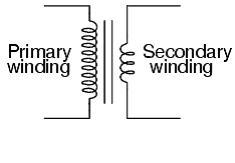
This principle of magnifying or diffusing the life we receive is something that is well illustrated in electrical systems, where step-up or step-down transformers either increase or decrease the voltage of the charge that first enters them.  As electricity runs across wires from telephone pole to telephone pole, it loses strength and has to be continually boosted at various intervals using a step-up transformer.  A step-up transformer acts like gears on a bicycle or in a car’s transmission, whipping the voltage up a notch.

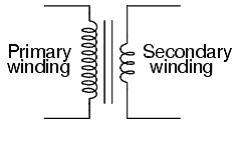
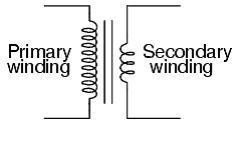
In transformers, coils are wound on a core called the primary winding that first receives the electrical current that enters it.   After passing through a secondary winding, one that has more coils than the primary winding, the electricity leaves the transformer boosted according to the number of extra coils it went through.

Transformers can also be used to step down an electrical charge to a level suitable for the low voltage circuits that most of our appliances run on. In a step-down transformer the secondary winding will have fewer coils than the primary winding.  This will reduce the charge to a level that is safe for household use.  How is this similar to the way a gentle answer turns away wrath?  Or the way some responses might be more like pouring gas on a fire?

In his classic book, Generation to Generation, Edwin Friedman speaks of how this transaction applies to what he calls “non-reactive leadership.”   He refers to this trait as “the capacity to maintain a non-anxious presence in the midst of an anxious system.”  Whether it’s a crisis in the workplace, the church, or a family system, a non-anxious presence, especially in leadership, will modify the anxiety of the whole community.  It will automatically “dial down” the stress of others.  The opposite is also true.  In Friedman’s words,

To the extent that we are anxious ourselves, it becomes potentiated and feeds back into the system at a higher voltage.  But to the extent that we can recognize and contain our own anxiety, then we function more as step-down transformers.  In that case our presence, far from escalating emotional potential, actually serves to diminish its effects.

Jesus tells us that, “with the measure you use, it will be measured to you—and even more.”  It truly is an awesome responsibility to have the God-given potential to return life to itself in either a worse or a better state than we received it.  Such knowledge should humble us to be that much more careful in how we serve God in all our relationships.

Where there is no love, put love, and there you will find love.

St. John of the Cross

Sent by God

As you sent me into the world, so I have sent them into the world.  John 17:18

Parenting, in its most basic sense, is simply a matter of nurturing the formation of children until they are old enough to be sent out into the world.  We see a similar aspect of parenting in the formation of Jesus’ followers as they mature from disciples to apostles.  At the beginning of His ministry, Jesus calls the disciples to “Come.”  At the end of His ministry, He tells them to “Go.”  The Lord invites us as well to come to Him, initially, in order to learn His ways.  But His ultimate goal is to send us as apostles into the world.

Until the day of Pentecost, the disciples saw themselves primarily as followers of Christ.  They learned, from the words and ways of Jesus, what the spiritual life should look like.  After the baptism of the Holy Spirit however, these same disciples became apostles, sent by Christ to do His bidding in the world.  Led by the direct impulse of the Holy Spirit, Philip went to Ethiopia, James to Galicia, Thomas to India, John to Ephesus and Peter to Rome.  They served the Lord each according to their own initiatives, confident that the Holy Spirit was orchestrating their various ministries according to the over-all purposes of God.

The disciples of St. Ignatius as well, after being trained in the discernment of spirits, were sent out to all parts of the world.  Led by the prompting of God, they trusted the Holy Spirit to deploy them as needed.  We too, are to recognize signs of our own maturing—from disciples who first come to follow Jesus, to apostles who are now sent by the Spirit of Christ to do His bidding in the world.   Such maturing is the anticipated fruit of all discipleship.

As disciples, we follow Jesus according to external means.  We study the Lord’s teachings and learn His ways through the example of others.  As apostles, however, we are sent according to the Spirit of Christ that prompts us from within.  Though we never stop learning from outside sources, we are called, as we mature, to walk more and more confidently according to the mysterious action of God who deploys us from within.

The Christian life invites us to live each day in accordance with the active grace of God’s creative Spirit.  Like water that comes into the tree through its roots, the confidence to serve God’s will comes to us from below.  It is a grace that we receive by submitting, as best we can, to the Lord’s immediate will in our lives.  And this we renew each day, and each hour, by simply giving back to God all that we have received.  Those who live according to this continual exchange experience life in the Spirit as something that is always fresh, its directives are new every morning.

As for you, the anointing you received from him remains in you, and you do not need anyone to teach you. But as his anointing teaches you about all things and as that anointing is real, not counterfeit—just as it has taught you, remain in him.

1Jn 2:27

Why Me?

Lean not to your own understanding.  Prov. 3:5

When the Lord first called him to obedience, Moses’ immediate instinct was to look to himself and say, “Who am I, that I should go to Pharaoh and bring the Israelites out of Egypt?” (Ex. 3:10).   Isaiah too, when called by God to be a prophet to Israel, immediately became conscious of his own sinfulness as a disqualifying truth (Isa. 6:5).  Jeremiah, Jonah and Timothy, as well, all felt, in their own estimation, inadequate to the task that God was calling them to, and they each hesitated in their response.

Mary, on the other hand, when called to submit to God’s will, never took her eye off the One who was calling her.  Her faith did not rest on whether she felt up to the task or not, but on the sufficiency of the One who was calling her to obedience.  Confident that the Lord would accomplish whatever He asked of her, Mary answered in all humility, “May it be done to me as you have said.”  (Luke 1:38).

The 17th cent. spiritual director Jeanne Guyon recognizes, as well, the propensity we have for leaning mostly on our own understanding when it comes to assessing our capacities to respond to the spiritual life.  In a letter to one of her directees, she speaks of the bad habit we all have of being distracted by our own self-appraisal when considering God’s call on our lives.  She chastises her directee about this saying,

You act as a person who, being called before a king, instead of regarding the king and his benefits, is occupied only with his own dress and appearance.

Our preoccupation with our selves, though seemingly a profitable exercise in truth, needs to be unmasked for what it actually is—a disguised form of self-love that usurps God’s prerogative to define us.  As Guyon says elsewhere, “Self-love has many hiding-places. God alone can search them out.”  She therefore counsels her directees to be careful about what they add to God’s word saying,

Let the view of yourself that God gives you be accepted, even if it relates to your fallen condition in general, or to particular faults.  Add nothing to this view by your own reflections.

The apostle Paul too, at one time, felt the inadequacy of a particular thorn in his life.  Though it took fasting and much prayer to teach him otherwise, he eventually understood the radical sufficiency of God’s grace to overcome whatever, in his own estimation, he felt was impeding his service.

Guyon describes the state of soul of one who is free from the awareness of even their own sins saying, “Now the soul seeks no longer to combat the obstacles, which hindered its return within, but lets God combat and act in the soul.”  She describes this state as one of passive love.  The soul has now matured beyond all need for self-reference, especially when in the presence of God.  Speaking of the progress that such souls make she writes,

It advances very much more by this way, in little time, than by all the self-scrutiny of many years. It is not without faults and imperfections, but divine love does not permit the soul to become disturbed by them, lest it become discouraged and its love hindered.

The proverb is wise that cautions us to not overly “lean to our own understanding.” Who are we, after all, to doubt the sufficiency of God’s grace to accomplish whatever He said He would do, and to equip us to be whoever He has called us to be?  As Paul assures us, our confidence should fully rest in the fact that “it is God who works in us to will and to act according to his good purpose” (Phil. 2:13).

Staying With the Program

Go into your inner room, close your door and pray to your Father who is in secret, and your Father who sees what is done in secret will reward you.

Mat. 6:6 (NASB)

According to Henri Nouwen, the chief task of the contemplative is to learn how to enter, and remain, in the solitude of his/her own heart.  Without such familiarity with ourselves we will automatically externalize our souls according to whatever other alternatives we seek for our heart’s expression.  Nouwen writes,

We have to fashion our own closet where we can withdraw every day and dwell in the gentle healing presence of our Lord.  Without such a place we will lose our own soul, even while preaching the gospels to others.

For the desert monks of the fourth and fifth centuries, the equivalent of the closet was the kellion, or cell, in which they lived their lives in isolation, and where they encountered the deeper truth of their relationship with God.  The cell was seen as a school, sufficient to teach us all we need for the spiritual life.  There is a story of a young monk who came to Father Moses for spiritual advice.  Rather than give him counsel, Father Moses simply told the monk to “Go to your cell and sit down, and the cell will teach you everything.”

Anselm Gruen, a contemporary Benedictine monk and author of Heaven Begins Within You, speaks as well of the transformative and educative power of the cell of our own solitude.  He affirms Father Moses’ advice regarding the benefits of our “inner room” saying,

If we stay in our cells something in us will be transformed; we will find order within ourselves.  We will come face to face with all the inner chaos that surfaces in us.  And we will learn how to not run away from it.

Prayer transforms us precisely because it opens the eyes of our heart to the actual truth of who we are, and therefore to the truth of God’s actual relationship with us.  For the early monks, encounter with oneself was the precondition for every authentic encounter with God.  And stabilitas—the constancy of holding on, and staying with oneself—was the prerequisite for every kind of human and spiritual progress.

A growing capacity to find peace with our selves, in spite of all the impulses to flee, is perhaps the main discipline we learn from solitude.  That is why the ancient fathers stressed the importance of holding out and not running away from our solitude.  Anselm Gruen writes,

Remaining in one’s cell, keeping to oneself, is the necessary condition for both spiritual progress and maturation as a human being.  The tree must send down roots to be able to grow.  Continual uprooting and transplanting only blocks its development. One cannot be a mature person without the courage to hold out and meet one’s own truth head on.

We are to resist the temptation to flee from prayer. If we stay in our cell, we will grow in our true sense of what reality is.  We will no longer be fooled by pretensions, either about ourselves or our relationship with God.  Gruen writes of his own experience, saying,

When everything is taken away from me and I really sit in all simplicity before God, at first everything is boring.  I start suspecting that everything I’ve been thinking or saying about God doesn’t add up.  But if I weather this feeling, if I don’t immediately worry about being able to find something meaningful, but simply stay put, then something moves within me, and I suddenly find myself touching the truth.  The truth is at first relentless, but it also sets us free.

The prayerful acceptance of “what is” heals us from our inordinate impatience with life—the very thing that keeps us in such a restless state.  There is a desert wisdom that states, “Cella est valetudinarium,” meaning the cell is an infirmary, a place where the sick can get better.  Gruen adds,

It is a place of wholeness, a place for healing, because we sense God’s loving and healing nearness there.  But I can have this positive experience of the cell only if I stay there even when everything in me rebels against it, when I am full of unrest.  Once I have overcome this first phase, then I can begin to experience the cell as heaven.

Jesus’ invitation in John 15 is for us to simply “remain in His love.”  When we consider the many trivial reasons for which we often stray from this love we can see the importance of learning how to remain with God in the secret place of our heart.  There, we will meet the truth head on.  And there we will find the way that leads beyond the illusions of impatience, to a growing acceptance of our real relationship with God.

Remember Me

Do this in remembrance of me.   Luke, 22:19

Our commitment to God is often expressed through the intentional act of remembrance. Much of the historical practice of our faith, as well as that of our Jewish origin, has been to deliberately recall the blessings and saving action of the Lord.  In the Old Testament it was the story of Israel’s exodus from Egypt that was continually impressed on the hearts of God’s chosen people.  In the New Testament, it is Christ’s death on the cross that we are called to remember, as often as we come together, through the re-enactment of the Lord’s Supper.  Our weekly Communion is one of the ways that we remain intentionally connected to our birth narrative.

Scripture and spiritual writings are also God-given means by which we continue to remember who we are in Christ.  They resonate with our deepest aspirations for the spiritual life and remind us of God’s invitation to be increasingly united with His Spirit.  We need the mirror of other people’s experience of God, either through fellowship or through the written testimony of other believers, in order to remind us of the spirituality that is possible in our own lives as well.

Prayer, particularly contemplative prayer, is another way by which we more deeply anchor our sense of self according to our new origin in Christ.  Through stillness and silence, we find ourselves re-created according to the more perfect image of God in us, our imago dei.  As the first chapter of Genesis depicts it, we intentionally return to that formless state over which the Spirit of original creation broods.  Or as Jeremiah envisions it, we present ourselves as clay in the Potter’s hand, ready to be re-formed according to whatever truth our Creator declares us to be.  Our way forward then is always one of remembering our original posture of conversion.  It is from this disposition that we reclaim, over and over again, our spiritual direction.

Curiously, we can say that much of our spiritual life is simply a matter of remembering that we actually have one.  Once we’ve tasted the beauty of submission in our relationship with God, whatever helps us remain in that posture is what then becomes our spiritual path.  Our task, as always, is to simply remain attached to the vine of Christ from which we bear the promised fruit, as well as submit to the necessary pruning.

We have been given many ways to return to God whenever we realize that we have wandered away.  Our discernment of when and how we stray then becomes key to our return.   In recognizing our own ebbs and flows with God, we have opportunity to more intentionally, and more consistently, choose the spiritual direction we want for our lives.


Remaining in the Lord is the only agenda left for those who are convinced of

the sufficiency of God’s grace.

-John Govan, S.J.