Keeping the Bar High

If you have raced with men on foot and they have worn you out, how can you compete with horses? Jer. 12:5

For over twenty years I worked as a professional musician, much of it as a jazz flutist in Toronto and Vancouver.  I’ve done a number of recordings, have performed internationally and have taught and lectured on jazz in various contexts.  But as my life became more and more defined by pastoral ministry, I eventually stopped playing professionally so that I could focus more on the work God was calling me to in spiritual direction.  I still practice and perform on occasion, but for more than a decade now, most of the music I am involved with is on an amateur level.  I say this without regret.

For many years though, I have been aware that I had lost vision for myself as a musician.  Though I still practiced as often as I could find time for, it was mostly just to keep my technique up to a reasonable level.  For a long time, I know that my practice has been geared more to maintenance than to improvement.  Its purpose has been to simply keep me from losing whatever skills I have acquired over the years.

This past summer however, as part of my holidays, I went to a week-long jazz workshop with some of Canada’s best jazz musicians.  Those who know jazz will recognize names like Don Thompson, Phil Dwyer, Neil Swainson, Oliver Gannon and Ian McDougall.  It was a curriculum designed for professional and semi-professional musicians.  It’s been years since I’ve had opportunity to play at this level and the effect that this camp has had on my vision has taught me much about the similar dynamics of apprenticeship that happen in my spiritual life.

The opportunity to be around others who live their lives immersed in music resurrected in me many of the old passions I still feel for this art.  Playing alongside such stellar musicians naturally raised my game up a few notches.  The effortlessness with which they negotiate the various charts gave a vicarious grace to my playing as well.  I see this as very similar to what happens when I am in the company of others who share my spiritual passions.  I love being with people who know more than I do about the spiritual life, and who have more grace in living it than I do.  Something of their commitment and love for prayer kindles the passion of my own love for God.

The other value I recovered from this jazz camp was that of a renewed vision for what artistic growth might look like for me.  I came back with a much more specific sense of where I want to be as a musician, and with new energy to commit to the practices that will get me there.  Again, this is also what happens in me when I am with people who are truly committed to their own spiritual direction.  Something good rubs off that helps me set my sights far higher than I ever could on my own.

Through the prophet Jeremiah, the Lord encourages us to raise the bar of our own race so that we can compete even with horses  Who are the horses in your life, those who are perhaps running at a pace that makes you work harder just to keep up with?  Who are those who have not lowered the bar of Christianity in their lives, and around whom you would not comfortably do so yourself?

Our faith calls us to stand apart from the pack of “men on foot” and to aspire, because of God’s enabling grace, to run in high places with the grace of a deer (Ps. 18:33). What will inspire you towards such high places in your vision for the spiritual life?  A retreat?  Spiritual direction?  Meeting regularly with other motivated Christians?  We each carry a particular vision for the spiritual life that we think we could be living.  What will motivate us to be more dedicated to the spiritual person we feel God inviting us to be?  Who will inspire us to cherish that vision more than we do now?

We are most satisfied in our spiritual life the more we are actually living it. And the less discrepancy there is between the spiritual life we envision for ourselves and the one we are actually living, the more we will enjoy peaceful accord with the person God is calling us to be.

Established in Christ

Continue in your faith, established and firm, not moved from the hope held out in the gospel.  Col. 1:23

Spirituality is not something we accumulate.  Nor is it a matter for which any language of acquisition is really appropriate.  It is always a fallacy to think in terms of quantifiable spiritual growth in an economy that is based solely on God’s grace.  Since we do not own or possess whatever spiritual life we have, we should always be wary whenever we find ourselves thinking in terms of loss or gain with regards to our relationship with God.

As humans, we tend to assess all things, including ourselves, in terms of progress—that we are getting better in this area, or regressing in that area of our lives.  Because we are temporal we think sequentially.  But God is beyond space and time, and a different vocabulary is necessary when we speak of maturity in this relationship.  Rather than talk about “spiritual growth” as if we were accumulating a yield, we should perhaps consider the preferred expression that both Peter and Paul use when they describe the mature spiritual life as one that is “established” (or “made stable”) in Christ.

In his letter to the Colossians, for instance, Paul describes those who are mature in their faith as “established and firm” (Col. 1:23).   The Greek word we translate as “established” in this verse is hedraios, which carries the sense of something that is immovable and steadfast.  Far from describing something progressive, the word refers to something sedentary.  It is the image of a person sitting securely in one place—one not easily moved from their hope.

Being established in faith then has less to do with growth than with being settled in relationship to the foundation of our lives.  The word Peter uses to describe those who are “established in the truth” (2Pet. 1:12) is sterizo, which speaks of something that is firmly set in place, like concrete or a rule of law.  As applied to our faith it defines a state of soul that is confirmed and constant in its bearings.

Since the Trinity is an established and ontological fact, there is no question of our gaining any more of this relationship than that which already exists.  The New Testament hope for our lives is that we be more firmly and consistently established upon this truth.  As Col. 4:12 prescribes, faith is a matter of our “standing firm in all the will of God, mature and fully assured.”  The only progression we can then speak of is that of our growing capacity to recognize when we have moved away from this foundation, and knowing how to return without delay.

The spiritual life then is more of a deepening disposition than a quantifiable asset.  It is an attitude of greater freedom in relationship to the movement of God’s will and of giving God increasing access to our lives as a forum for His will.  Even our capacity for prayer should not be thought of in terms of an accumulating skill, but more as an opportunity to grow in familiarity, attentiveness and appreciation of the already-existing foundation of Christ upon which, at every moment, we are invited to firmly establish our faith.

So then, just as you received Christ Jesus as Lord, continue to live in him, rooted and built up in him, strengthened in the faith as you were taught, and overflowing  with thankfulness.

Col. 2:6

Reacting Well

A gentle answer turns away wrath, but a harsh word stirs up anger.  Prov. 15:1

Our own reactiveness to life can serve to either increase or decrease whatever presents itself to us.  This is especially so with regards to the life we meet in another person.  Depending on the degree of our response we will either intensify or reduce the stress, sorrow, crisis, hope, enthusiasm, anger or love that others present to us.  And this is where the care we take in choosing our responses to life can either directly serve God’s purposes in another person’s life, or not.  It’s a wonderful spiritual gift to know how to turn away wrath, or to fan the flames of encouragement in another person’s heart.

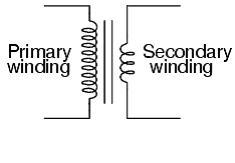
This principle of magnifying or diffusing the life we receive is something that is well illustrated in electrical systems, where step-up or step-down transformers either increase or decrease the voltage of the charge that first enters them.  As electricity runs across wires from telephone pole to telephone pole, it loses strength and has to be continually boosted at various intervals using a step-up transformer.  A step-up transformer acts like gears on a bicycle or in a car’s transmission, whipping the voltage up a notch.

In transformers, coils are wound on a core called the primary winding that first receives the electrical current that enters it.   After passing through a secondary winding, one that has more coils than the primary winding, the electricity leaves the transformer boosted according to the number of extra coils it went through.

Transformers can also be used to step down an electrical charge to a level suitable for the low voltage circuits that most of our appliances run on. In a step-down transformer the secondary winding will have fewer coils than the primary winding.  This will reduce the charge to a level that is safe for household use.  How is this similar to the way a gentle answer turns away wrath?  Or the way some responses might be more like pouring gas on a fire?

In his classic book, Generation to Generation, Edwin Friedman speaks of how this transaction applies to what he calls “non-reactive leadership.”   He refers to this trait as “the capacity to maintain a non-anxious presence in the midst of an anxious system.”  Whether it’s a crisis in the workplace, the church, or a family system, a non-anxious presence, especially in leadership, will modify the anxiety of the whole community.  It will automatically “dial down” the stress of others.  The opposite is also true.  In Friedman’s words,

To the extent that we are anxious ourselves, it becomes potentiated and feeds back into the system at a higher voltage.  But to the extent that we can recognize and contain our own anxiety, then we function more as step-down transformers.  In that case our presence, far from escalating emotional potential, actually serves to diminish its effects.

Jesus tells us that, “with the measure you use, it will be measured to you—and even more.”  It truly is an awesome responsibility to have the God-given potential to return life to itself in either a worse or a better state than we received it.  Such knowledge should humble us to be that much more careful in how we serve God in all our relationships.

Where there is no love, put love, and there you will find love.

St. John of the Cross

Sent by God

As you sent me into the world, so I have sent them into the world.  John 17:18

Parenting, in its most basic sense, is simply a matter of nurturing the formation of children until they are old enough to be sent out into the world.  We see a similar aspect of parenting in the formation of Jesus’ followers as they mature from disciples to apostles.  At the beginning of His ministry, Jesus calls the disciples to “Come.”  At the end of His ministry, He tells them to “Go.”  The Lord invites us as well to come to Him, initially, in order to learn His ways.  But His ultimate goal is to send us as apostles into the world.

Until the day of Pentecost, the disciples saw themselves primarily as followers of Christ.  They learned, from the words and ways of Jesus, what the spiritual life should look like.  After the baptism of the Holy Spirit however, these same disciples became apostles, sent by Christ to do His bidding in the world.  Led by the direct impulse of the Holy Spirit, Philip went to Ethiopia, James to Galicia, Thomas to India, John to Ephesus and Peter to Rome.  They served the Lord each according to their own initiatives, confident that the Holy Spirit was orchestrating their various ministries according to the over-all purposes of God.

The disciples of St. Ignatius as well, after being trained in the discernment of spirits, were sent out to all parts of the world.  Led by the prompting of God, they trusted the Holy Spirit to deploy them as needed.  We too, are to recognize signs of our own maturing—from disciples who first come to follow Jesus, to apostles who are now sent by the Spirit of Christ to do His bidding in the world.   Such maturing is the anticipated fruit of all discipleship.

As disciples, we follow Jesus according to external means.  We study the Lord’s teachings and learn His ways through the example of others.  As apostles, however, we are sent according to the Spirit of Christ that prompts us from within.  Though we never stop learning from outside sources, we are called, as we mature, to walk more and more confidently according to the mysterious action of God who deploys us from within.

The Christian life invites us to live each day in accordance with the active grace of God’s creative Spirit.  Like water that comes into the tree through its roots, the confidence to serve God’s will comes to us from below.  It is a grace that we receive by submitting, as best we can, to the Lord’s immediate will in our lives.  And this we renew each day, and each hour, by simply giving back to God all that we have received.  Those who live according to this continual exchange experience life in the Spirit as something that is always fresh, its directives are new every morning.

As for you, the anointing you received from him remains in you, and you do not need anyone to teach you. But as his anointing teaches you about all things and as that anointing is real, not counterfeit—just as it has taught you, remain in him.

1Jn 2:27

Why Me?

Lean not to your own understanding.  Prov. 3:5

When the Lord first called him to obedience, Moses’ immediate instinct was to look to himself and say, “Who am I, that I should go to Pharaoh and bring the Israelites out of Egypt?” (Ex. 3:10).   Isaiah too, when called by God to be a prophet to Israel, immediately became conscious of his own sinfulness as a disqualifying truth (Isa. 6:5).  Jeremiah, Jonah and Timothy, as well, all felt, in their own estimation, inadequate to the task that God was calling them to, and they each hesitated in their response.

Mary, on the other hand, when called to submit to God’s will, never took her eye off the One who was calling her.  Her faith did not rest on whether she felt up to the task or not, but on the sufficiency of the One who was calling her to obedience.  Confident that the Lord would accomplish whatever He asked of her, Mary answered in all humility, “May it be done to me as you have said.”  (Luke 1:38).

The 17th cent. spiritual director Jeanne Guyon recognizes, as well, the propensity we have for leaning mostly on our own understanding when it comes to assessing our capacities to respond to the spiritual life.  In a letter to one of her directees, she speaks of the bad habit we all have of being distracted by our own self-appraisal when considering God’s call on our lives.  She chastises her directee about this saying,

You act as a person who, being called before a king, instead of regarding the king and his benefits, is occupied only with his own dress and appearance.

Our preoccupation with our selves, though seemingly a profitable exercise in truth, needs to be unmasked for what it actually is—a disguised form of self-love that usurps God’s prerogative to define us.  As Guyon says elsewhere, “Self-love has many hiding-places. God alone can search them out.”  She therefore counsels her directees to be careful about what they add to God’s word saying,

Let the view of yourself that God gives you be accepted, even if it relates to your fallen condition in general, or to particular faults.  Add nothing to this view by your own reflections.

The apostle Paul too, at one time, felt the inadequacy of a particular thorn in his life.  Though it took fasting and much prayer to teach him otherwise, he eventually understood the radical sufficiency of God’s grace to overcome whatever, in his own estimation, he felt was impeding his service.

Guyon describes the state of soul of one who is free from the awareness of even their own sins saying, “Now the soul seeks no longer to combat the obstacles, which hindered its return within, but lets God combat and act in the soul.”  She describes this state as one of passive love.  The soul has now matured beyond all need for self-reference, especially when in the presence of God.  Speaking of the progress that such souls make she writes,

It advances very much more by this way, in little time, than by all the self-scrutiny of many years. It is not without faults and imperfections, but divine love does not permit the soul to become disturbed by them, lest it become discouraged and its love hindered.

The proverb is wise that cautions us to not overly “lean to our own understanding.” Who are we, after all, to doubt the sufficiency of God’s grace to accomplish whatever He said He would do, and to equip us to be whoever He has called us to be?  As Paul assures us, our confidence should fully rest in the fact that “it is God who works in us to will and to act according to his good purpose” (Phil. 2:13).